Showing posts with label Ziggo. Show all posts

Tuesday, May 10, 2016

Ziggo adds Chromecast and Airplay to Horizon Go

Horizon-Go-UPC-AustriaDutch cable operator Ziggo is adding Chromecast and Airplay to its Horizon Go app enabling users to stream live channels directly to their TV set.
Horizon Go is available as a TV Everywhere service on all WiFi and 3G and 4G networks in the country on smartphones and tablets. Depending on the contract, Ziggo customers can access up to 100 channels on the app, which is available from the Apple Appstore and the Google Play Store for use on iOS and Android devices.
However, the Replay TV function is not available to Chromecast and Airplay due to rights issues. Last August, Ziggo added Replay TV to the app, making it possible for viewers to restart a programme from the beginning as well as go back in time seven days in order to catch up on a programme.
Also, UPC’s MyPrime VOD service is not yet available for streaming, again due to rights issues.
Liberty Global’s Unitymedia already offers Horizon Go with streaming via Chromecast and Airplay.

Thursday, May 5, 2016

Ziggo adds Chromecast and Airplay to Horizon Go

Horizon-Go-UPC-AustriaDutch cable operator Ziggo is adding Chromecast and Airplay to its Horizon Go app enabling users to stream live channels directly to their TV set.
Horizon Go is available as a TV Everywhere service on all WiFi and 3G and 4G networks in the country on smartphones and tablets. Depending on the contract, Ziggo customers can access up to 100 channels on the app, which is available from the Apple Appstore and the Google Play Store for use on iOS and Android devices.
However, the Replay TV function is not available to Chromecast and Airplay due to rights issues. Last August, Ziggo added Replay TV to the app, making it possible for viewers to restart a programme from the beginning as well as go back in time seven days in order to catch up on a programme.
Also, UPC’s MyPrime VOD service is not yet available for streaming, again due to rights issues.
Liberty Global’s Unitymedia already offers Horizon Go with streaming via Chromecast and Airplay.

Tuesday, September 1, 2015

Ziggo lost 17,000 TV homes in Q2

Dutch TV market sharesZiggo leads the drop in Dutch TV subscriptions in the second quarter of 2015, but cable is still tops despite fast IPTV and fibre growth.
The Dutch TV market lost 17,000 connections during the second quarter of 2015, to end the quarter with 7.85 million subscribers.
The decline was mainly due to Ziggo losing customers. According to Telecompaper’s latest quarterly report on the Dutch Television Market, the cable operators continue to lose market share to IPTV providers over DSL and fibre networks.
Digital TV connections grew by 0.4% during the quarter, while analogue-only subscribers fell by 4.4% compared to March. Digital TV is now used by more than 88% of the market.
Cable still accounted for over half (52.9%) of digital TV subscribers in Q2, despite losing market share to the increasingly available IPTV services over DSL and fibre networks. DSL was responsible for 18% of the digital TV connections and fibre for almost 12% at the end of June 2015.
Ziggo lost digital TV customers for the second quarter in a row, seeing its market share fall to just over 48%. KPN added half a percent point of market share in the quarter to take almost 31% of digital TV connections. On the total TV market, Ziggo had around 53% of connections, after again losing market share to KPN, which grew to almost 28% of the market.

Friday, May 22, 2015

New Ziggo has 60.6% penetration of homes paased

During the first quarter of 2015, Dutch cable operator Ziggo has lost 49,500 TV customers. The total number of TV homes of the combined cable operator was 4,239,900, with 6,993,600 homes paased, the penetration stood at 60.6%.
lgi_ziggo_subs q1_2015
According to the Dutch language website Digitale Kabeltelevisie, the losses of subscribers because of the merger between UPC and Ziggo into the new Ziggo, are not extreme, but in line with the ongoing erosion of cable subscriptions.
In The Netherlands, the major competitor on the triple play market is incumbent KPN with its IPTV service.
The chart below tracks the quarterly losses of the combined Dutch cable nets of Ziggo and the former UPC.
ziggo_q1_2015_subscriber losses

Wednesday, April 1, 2015

450 jobs to go at new Ziggo

ziggo buildingThe integration of UPC Nederland and Ziggo into a single cable operator means the loss of 450 jobs, Ziggo announced Wednesday.
In addition ‘several hundred’ short-term contracts and external jobs will be axed. The company has submitted its proposals to the workers’ council for approval.
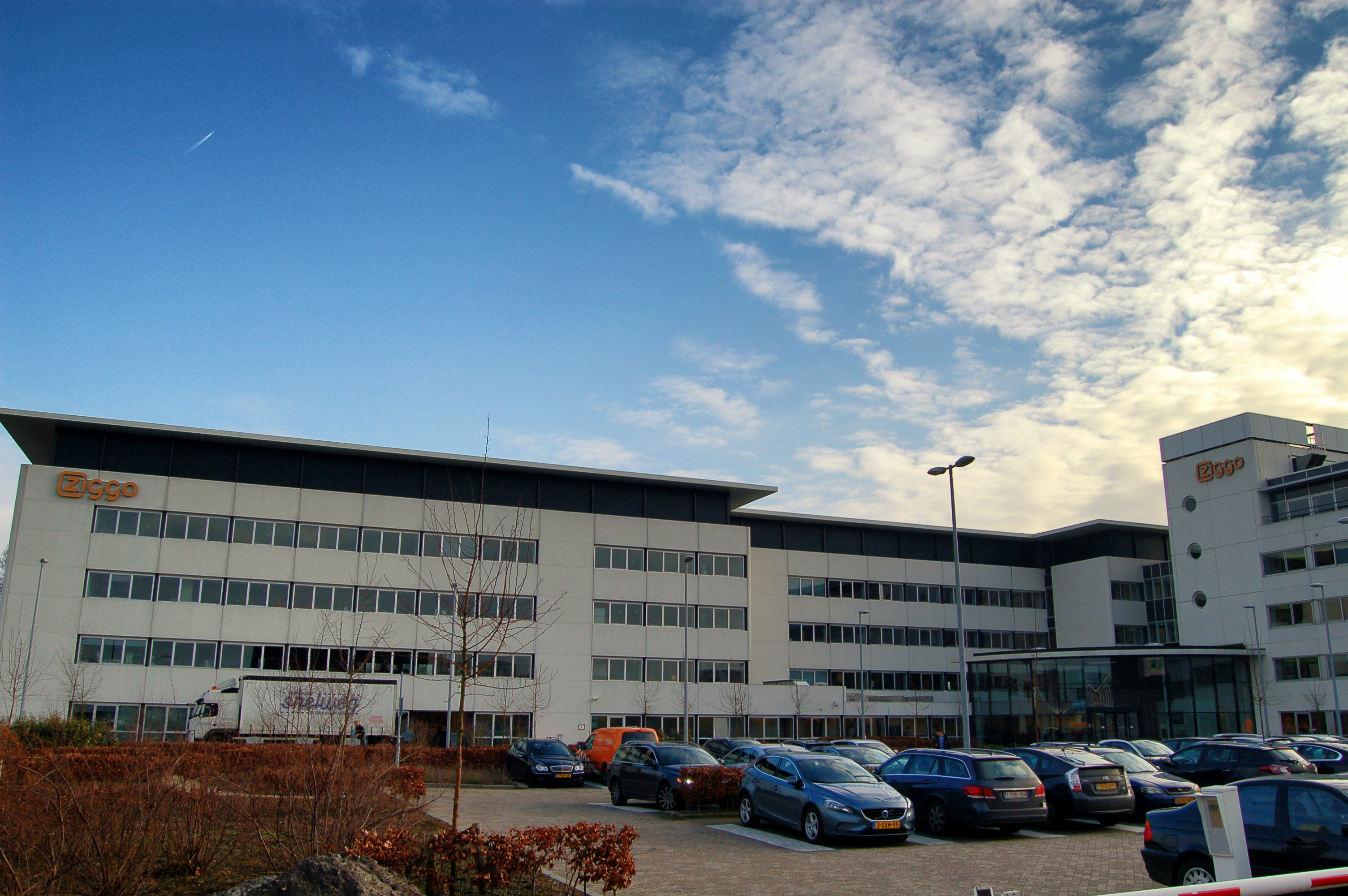
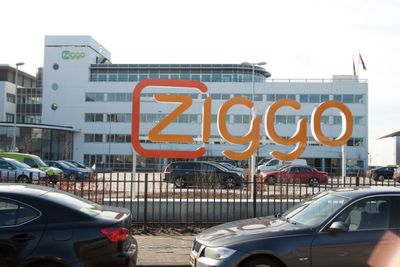
The transition will take place between July 2015 and December 2018. New Ziggo will be headquartered at the current Ziggo offices in Utrecht (pictured). Offices in Heerhugowaard, Rijswijk and Nijmegen will be closed down.
In the statement, UPC and Ziggo said they “have ensured a good social plan on which employees can count.” An integral part of the social plan is that all staff will be offered coaching to ensure they will be able to find work, both internally and externally.
Following the merger, the new Ziggo will reach a potential of 90% of the Dutch population. The combined operations serve 4.3 milllion TV customers, 3.1 million broadband connections and 2.6 million telephony homes.
Ziggo will now also be able to offer over two million free Wi-Fi spots across the country.

TV everywhere app usage revealed

YouTube still rules when it comes to TV app usage on smartphones and tablets, but broadcasters take the lead over platforms, according to GfK research.
Research in the Netherlands shows that the TV apps from broadcasters are by far more popular than those from the cable and IPTV platforms, including UP{C’s Horizon and the Ziggo TV app.
The news app from NOS and the catch-up TV plus live streaming TV app from NPO are extremely popular, with RTL XL (coach up) following behind.
Remarkable is that table usage outperforms smart phone by factor two.
Of the TV Everywhere apps from the platforms, the Ziggo TV app is the most popular, followed by Netflix and (good old) Teletekst from the public broadcaster.
The RL Nieuws app combines text and video and is the high most popular app, followed by Horizon Go and KPN.
The figures were presented by Paul van Niekerk, Managing Director. GfK Hilversum, during a special afternoon on TV recommendation and curation hosted by Bindinc.
Dia1

Wednesday, March 11, 2015

Combined Ziggo has 54% of Dutch TV market

The combined market share of Ziggo and UPC amounted to almost 54% of the Dutch TV-market at the end of 2014.
Of the share, almost 34% came from the former Ziggo areas and around 20% from the former UPC areas. KPN is number two with a market share of almost 27%. The picture is the same on the digital TV market, only the shares are slightly different with KPN (29.5%) is trailing the Ziggo/UPC combination (49%) with former Ziggo subs responsible for 33 percent% former UPC subs for 16%.
The Dutch TV market grew by 20,000 subscribers during the fourth quarter of 2014, to end the year with 7.76 million subscribers, according to Telecompaper’s quarterly reporton the Dutch TV market.
During the quarter, digital TV subscribers grew by 0.6% which was enough to off-set the continued decrease of analogue-only subscribers. The main reason for the digital TV subscriber’s growth was consumers choosing IPTV via DSL or fibre with the traditional TV technology cable only growing a little. The consumer TV services generated almost EUR410 million in revenues in the fourth quarter of 2014, slightly higher than in the previous quarter.
Almost 90 percent of the market now uses digital TV and cable is still the largest digital TV technology with over half (54%) of the subscribers in Q4, despite losing market share to the increasingly available IPTV services over DSL and fibre networks. DSL is responsible for 17% of the digital TV connections and fibre for almost 11%.

Monday, February 9, 2015

New Ziggo to abandon retail model for STBs

ziggo buildingDutch cable operator Ziggo will stop activating smart cards that are used with purchased receivers, but will continue to support customers who own a retail STB.
Following the acquisition of Ziggo by Liberty Global, the operator is now adjusting its business model to that of UPC Nederland. At the same time, Ziggo is also adjusting its line-up of TV and radio channels to that of UPC Nederland on a region-by-region basis.
Until now, Ziggo used to have two business models for its TV customers: people could choose between a rental model or buy a STB or a CI+ TV set in retail and having the smart card activated by the cabler.
UPC Nederland only offers a rental model: people have to rent a STB (either the Open TV powered Mediabox or the Horizon box) or rent a CI+ module for €4.00 a month.
In a letter to retailers, Ziggo has now outlined that the operator will not activate smart cards obtained in retail from April 1. However, all existing customers will continue to be able to use their reception equipment.
New Ziggo will also start to offer the Horizon product to its customers.

Saturday, November 1, 2014

Ziggo’s TV marketshare remains at 62.5%

ziggo2014q3Following years of declining TV marketshare, Dutch cabler Ziggo has maintained is TV marketshare at 62.5% during the third quarter.
However, the total number of TV homes continued to drop – with 18,000 households – bringing the total to 2,759,000, but due to a decrease in the number of homes passed, the operator’s market penetration remained stable at 62.5%, according to an analysis of the Dutch websiteDigitalekabeltelevisie.
Ziggo saw the total number of digital TV homes increase with 13,000 to a total of 2,304,000, which brings the percentage of digital customers to 84.2%.
During the quarter the number of homes taking additional digital packages rose with 1,000 to 824,000. However, compared with a year ago, the number of homes with additional tiers dropped 44,000.

Friday, July 18, 2014

Ziggo claims churn continues to decline

ziggo.carsSimilar to the last few quarters, Ziggo recorded lower churn compared to the previous year, the company said at the presentation of its Q2 figures.
Customer churn in Q2 2014 was 7.6%, down from 9.5% in Q2 2013 and down from 8.6% in Q1 2014. Typically, the first and fourth quarters are traditionally the quarters with relatively high ‘seasonality’ churn compared to the other two quarters.
The number of digital TV subscribers increased by 10,000 to 2.27 million in Q2, representing a penetration of 86.3%. The number of TV-only subscribers decreased by 21.3% compared to the same quarter last year, landing at a total of 668,000 as at June 30, 2014. The decrease was mainly due to the upsell of the dual play and triple play bundles to TV-only subscribers, as well as churn among TV-only subscribers.
Subscribers to digital pay TV decreased by 34,000 during the second quarter, which was negatively affected by seasonality due to the end of the football season. For the full year, the number of subscribers to digital pay TV was down by 45,000, due to the difficult macro-environment, the switch from subscription-based to on-demand-based video consumption and increased competition from OTT premium TV providers.
Commenting on the future merger with UPC CEO René Oberman said in a statement: “Until the merger with the Dutch operations of Liberty Global closes, which is expected to happen in Q4, we will run the company completely independently. Our management team is committed to delivering the targeted financial results, whilst aiming to outperform our Dutch peers on revenue growth at the same time.”

Friday, July 4, 2014

Ziggo launches Wi-Fi phone calls JULY 4, 2014 07.15 EUROP

Ziggo wifi hot spotsDutch operator Ziggo is to introduce Ziggo Bapp for its fixed line customers.
With this free app, Ziggo customers can make calls via Wi-Fi using a smartphone or tablet and at the same rates as a fixed line subscription.This app is a handy and cheap option, particularly for making calls from abroad.
For Ziggo customers with a VolopBellen Altijd subscription the costs for all Dutch mobile and fixed numbers are already included, even from abroad.
Ziggo Bapp can be downloaded free from the App Store and the Google Play Store.Once customers have made a Ziggo Bapp account in MijnZiggo and activated the app on their smartphone or tablet (iOS/Android), customers can immediately make calls with Ziggo Bapp.
Ziggo has been testing Bapp for some time, while UPC has also launched a similar service some time ago.

Wednesday, April 16, 2014

Ziggo: TV down, broadband and bundles up

ZiggoHQ+logoDutch operator Ziggo has said that during the first quarter its internet subscriber total increased by 38,000 and All-in-1 bundle by 20,000.
However, digital pay-TV revenues were down 4.3% y-o-y due to a 16,000 decline in subscribers, partly offset by an ARPU increase and an uptake in VOD.
Total internet subscribers reached 1.95 million at the end of Q1, 2014, representing 2.0% sequential growth and 7.5% y-o-y growth.
All-in-1 bundle subscribers were up 20,000 (incl. 3,800 triple play business bundles) in Q1 to a total of 1.56 million, resulting in 1.3% sequential growth and 7.0% y-o-y growth. All-in-1 penetration now reaches 57.1% of Ziggo’s consumer customer base
Digital pay-TV revenue was down 4.3% y-o-y due to a 16,000 decline in subscribers, partly offset by an ARPU increase and an uptake in VOD. Consumer ARPU for the quarter up 3.6% y-o-y to €43.07.
“Clearly, the recommended offer on Ziggo from Liberty Global, which was announced on January 27, was the most important event for the company during the first quarter. We believe that the combination of the two Dutch cable companies offers a great opportunity for all stakeholders as it allows us to jointly invest and provide even better services to our customers,” said CEO René Obermann in a statement.
“When we focus on the operational developments in the quarter, we see a continuation of the operational trends from the second half of 2013: continued RGU growth for both consumer and B2B, particularly in broadband internet. Similar to the last two quarters, growth in internet RGUs has exceeded growth in triple play subscriptions following the success of our double play TV and internet offering which particularly addresses the ‘mobile-only’ telephony households. The success of our internet is strongly supported by WifiSpots as well as on-going speed increases of up to 180Mbit/s as recently announced. We expect our announced speed increase to make us even more competitive in broadband and support further growth in this area. For Ziggo mobile we recorded 30,000 net adds in the first quarter, in line with the previous quarter.”
Obermann also stated that “Until if and when the merger closes, which is expected to happen in Q3/4, we will run the company completely independent. Our management team is committed to delivering the targeted financial results, whilst aiming to outperform our Dutch peers on revenue growth at the same time.”

Wednesday, March 12, 2014

Ziggo plans deals with Netflix, YouTube

ziggo-hqDutch cable operator Ziggo plans to close deals with online video service such as Netflix and YouTube in the future.
Talking to the NRC Handelsblad newspaper CEO René Obermann said he is looking to work together with such services along the lines of the recent Comcast/Netflix agreement, where the OTT video platform will pay for high quality distribution on the cable network.
However, such an agreement would contravene net neutrality,which requires ISPs to indiscriminately distribute any signal to its broadband customers – even if such services would compete with the operator’s own TV offer.
Liberty Global, owner of UPC Nederland, is working to take over Ziggo and integrate its two Dutch cable operations into a single company under Ziggo branding.

Saturday, February 15, 2014

Ziggo adds 6,000 digital TV subscribers in Q4 2013

Friday, January 24th, 2014 
company logo
UTRECHT — Ziggo N.V. has released Q4 2013 results.
Consumer products & services
Subscribers to digital Pay TV recovered slightly with a limited subscriber growth of 6,000 during the quarter versus a decline in the prior-year quarter and the first quarters of 2013. For the full year, the number of subscribers to digital Pay TV is still down by 64,000, partly due to the difficult macro-environment and the switch from subscription based to on-demand based video consumption.
The number of digital TV subscribers increased by 6,000 in Q4 to 2.25 million, representing a penetration of 84.7% of our consumer customer base. The number of TV-only subscribers decreased by 23.0% compared to the same quarter last year, to a total of 747,000 as at December 31, 2013. The decrease was mainly due to the upsell of the dual play and triple play bundle to our TV-only subscribers as well as churn. Among TV-only subscribers, churn came down compared to the end of last year and the first half of 2013, following higher investments in customer retention.
On November 5, we introduced the CI+ 1.3 module, enabling interactive services such as on-demand movies, television series or missed TV programs, without the use of a SetTop Box and using the remote control of the television set. Ziggo is the first in the world to enable interactive television via such a CI+ module. Since the beginning of 2013, an increasing number of televisions has been enabled for usage of this CI+ 1.3 module. Many Samsung, LG and Philips televisions have already been certified by Ziggo for this service and many more brands are to be expected in 2014. The CI+ 1.3 module makes use of the streaming graphical user interface (SGUI) which was deployed earlier this year.
By December 31, the number of activated decoders with this new SGUI had grown to over 310,000 (excl. CI+ 1.3), from 229,000 at the end of Q3. Today, the SGUI already accounts for 40-50% of total VOD activity. On December 31, we had over 566,000 customers with an interactive device.
Subscribers
                            31 Dec  30 Sep  Change in  31 Dec  Change %
Footprint(1)                  2013    2012    Q4 2013    2012     y-o-y
                            ------  ------  ---------  ------  --------
Homes passed                 4,247   4,237         10   4,213      0.8%
Analog TV only                 505     532       (27)     637   (20.7%)
  Consumer                     408     436       (28)     545   (25.0%)
  B2B                           96      96          1      92      4.9%
Analog and digital TV(2)     2,291   2,280         12   2,256      1.6%
  Consumer                   2,253   2,247          6   2,231      1.0%
  B2B                           38      33          6      24     57.9%
  Total TV customers         2,796   2,811       (15)   2,892    (3.3%)
    Consumer                 2,661   2,683       (22)   2,776    (4.1%)
    B2B                        135     128          6     116     15.8%
Digital pay TV subscribers     872     863          8     929    (6.2%)
  Consumer                     853     848          6     917    (6.9%)
  B2B                           18      16          3      12     48.7%
1. Operating data relating to our footprint and RGUs are presented as at the end of the period indicated.
2. Digital television RGUs equals the total number of standard TV subscribers who activated a smart card as at the end of the periods indicated. As a result, digital TV RGUs represents the number of subscribers who have access to our digital TV services. In any given period, not all of these digital TV RGUs will have subscribed to additional digital pay TV services. As at December 31, 2013, 872,000 of our total digital TV RGUs subscribed to one or more of our digital pay TV services.
Statement on discussions with Liberty Global
Following our announcement on December 12, we have continued discussions with Liberty Global regarding a potential acquisition of the Company. These discussions have progressed. Further announcements will be made if and when relevant. There is no certainty that any agreement will be reached.

Tuesday, November 5, 2013

Ziggo launches STB-less CI+ 1.3 interactivity

Smit interactieve moduleDutch cable operator Ziggo is taking its Cloud TV interactive services a step further with the launch of CI+ 1.3 modules.
As the first operator in the world, Ziggo is launching its on-demand and catch-up TV services for customers with a new CI+ module (version 1.3 or higher), and a TV set certified by Ziggo.
Ziggo has been testing the CI+ 1.3 version of its Cloud TV interactivity for the past few months. Using ActiveVideo Networks cloud based interactive TV, Ziggo customers with a zapper box have already been enabled to use the operator’s non-linear services. Starting Wednesday, November 6, STB-less viewers can also access the additional features. It is a worldwide first to offer interactive TV over a common interface.
“This development offers our customers great benefits”, said Pieter Vervoort, VP consumer products and innovation at Ziggo.
“With the interactive CI+ module, customers can watch movies, television series and missed TV programmes directly on their TV-set and without the need for extra equipment, extra leads or an extra remote control. The advantage for Ziggo is that the look and feel, and the way interactive television is used, is exactly the same for all types of peripheral equipment.”
The CI+ 1.3 modules (CAMs) will be available from two manufacturers, SMiT and Quantis/Neotion. The modules are available in retail for an average retail price of EUR89 and also directly from the operator.
Ziggo continues to promote its high-end cable tuners with PVR with various promotional activities and special bundle prices. Ziggo’s cloud TV service has so far been a resounding success with 229,000 simple STBs activated for usage at the end of Q3, 2013.
According to Eric Meijer, senior product developer at Ziggo, there are now around 250 TV sets certified for CI+ 1.3 from Philips, LG and Samsung with others to follow soon.
At the moment, the Cloud TV services activates a ‘personal channel’ which streams the requested programme in DVB-C to the customer. The future CI+ 1.4 version will add new features such as extensions to the CI+ browser and the handling of multiple encrypted streams (multi stream).
Other new features include the ability to route high-bandwidth IP streams through the CAM, the ability for the CAM to control those IP streams, the new “Online Service Descriptor Table”(OSDT), and support for IP multicast.
The viewer can launch Ziggo’s Cloud TV service by pushing the red button, which – in theory – could interfere with the HbbTV signals from the broadcasters, as they are also activated by the same button. As Cloud TV is using html5, this will take precedence over the HbbTV function, thereby de facto blocking the service. At the moment, the major Dutch cable operators (Ziggo, UPC) are not distributing the HbbTV signals over their networks. Interestingly, the remote control of the UPC Horizon box doesn’t even have a red button.

Friday, October 18, 2013

Ziggo claims Cloud TV success

ziggoCIPlusleftThe cloud-based interactive TV services rolled out by Ziggo has been declared a resounding success with over 229,000 set-tops activated. The cabler is now testing cloud TV with CI+ 1.3 modules.
Earlier this year, the Dutch cable operator was the first in the world to roll out a fully cloud-based interactive DVB-C TV service. By combining the IP protocol with the DVB-C standard, even set-top boxes without built-in hardware functionality for interactivity are able to provide interactive services via cable.
By September 30, the number of activated decoders with this new streaming graphical user interface (SGUI) had grown to over 229,000 decoders, from 60,000 in Q1 and 150,000 at the end of Q2. Today, the SGUI account already for over 50% of the VOD activity. On September 30, Ziggo had over 542,000 customers with an interactive receiver or recorder, up from 480,000 as at the end of Q2 2013.
Building on this success, the operator started a field test with the first CI+ 1.3 modules in the second week of July. The new CI+ 1.3 standard provides optional access to interactive services. Ziggo said the new service will be available at the beginning of November, a worldwide first to offer interactive TV over a common interface.
This introduction will further increase the number of interactive receivers in Ziggo’s customer base and stimulate growth of its video-on-demand services and revenues. Currently, over 900,000 of its customers watch digital TV using a legacy version (1.2) of the common interface. Only those customers who have purchased a certified CI+ 1.3 TV will be able to use the interactive services associated with the new CI+ 1.3 module.
Today approximately 250 different TVs from Philips, LG and Samsung have been certified for interactive TV with the new CI+ 1.3 module and Ziggo is in the process of certifying more brands.
On September 15, Ziggo received an award from the International Broadcast Convention (IBC) in the Content Delivery category with the first fully cloud-based interactive DVB-C TV service in the world.

Sunday, September 22, 2013

Hybrid networks presenting new challenges, says Ziggo

Hybrid networks and the ability of content providers to bypass the relationship that access network providers have with their subscribers presents a new challenge for operators, leading them to seek new forms of partnership, according to Ivar Slavenburg, business innovation manager at Dutch cable operator Ziggo.
Hybrid delivery to multiple devices has a number of disadvantages for operators, according to Slavenburg, speaking at content security provider Verimatrix’s Multi-Network Solutions in the Real World event at IBC in Amsterdam.
Slavenburg said that until now Ziggo has created value through four main activities – its network, access services, media services – transcoding and ingestion – and media sales to its customers.
Increasingly, however, cable operators see content providers creating their own apps for multi-device access, including the likes of HBO, in whose Dutch operation Ziggo has a stake. On the delivery of OTT content over Ziggo’s network, Slavenburg said that the company was now seeing OTT players deliver content that Ziggo was also trying to sell direct to its customers, leading to a potential conflict of interest.
Slavenburg said that Ziggo’s focus was on upselling subscribers to take additional content. However, content providers were focusing on creating experences and enriching them with additional information and content around different screens. “This is now possible in the hybrid model,” said Slavenburg. “There is a broader range of ways in which content is disclosed to our subscribers.”
“There is a benefit for the consumer but there is a disadvantage for us because we don’t record exactly what the customer is doing any more,” said Slavenburg.
In the future, device manufacturers such as games consoles makers will build branded services, said Slavenburg. “It would be difficult for us to make the jump to become a gaming company but why shouldn’t we cooperate on one of the [four] layers…and still have our customer addressable for other services. We have to start thinking in layers. It is a different discussion than in the past, all because of hybrid network technology.”
Ziggo will roll out 4G in the next year. The company also has over one million WiFi slots in its network area.
“We have to be capable of running different technologies over our network,” said Slavenburg.

Thursday, August 22, 2013

Ziggo reports 150,000 Cloud TV users

Dutch cable operator Ziggo has said that approximately 150,000 receivers have registered for its Cloud TV service.
This accounts for approximately one-third of Ziggo VOD activity. The 150K total represent a three-month increase of 150% for Active Video’s “browser in the cloud”.
CloudTV’s “write once, deploy everywhere approach” moves the HTML5 browser to the cloud and streams the fully-formed UI to such devices as existing and new QAM and IP STBs, CI+ modules, HDMI sticks and SmartTVs. ACG Research has shown how CloudTV can accelerate the rollout of consistent, branded UIs on any STB or connected device at TCO savings of up to 83%.
Using CloudTV, Ziggo this year became the first cable operator in the world to provide interactive services without built-in hardware. CloudTV also is being used by Charter Communications to support its cloud-based UI strategy and by Net2TV, an online video provider, to power its Portico TV service on connected devices.
“Moving the browser to the cloud eliminates the need to write UIs for every make and model of CE device,” said Ronald Brockman, CTO of ActiveVideo. “The resulting user experiences are less costly to develop, faster to develop and have far greater reach than more limited UIs that rely on device-based browsers and metadata in the cloud.”
At IBC, ActiveVideo (Stand 3.B13) will be showing how CloudTV software platform decouples the user interface from device resources, enabling deployment of consistent, branded experience and applications – with or without a set-top box — on every device.

Thursday, July 18, 2013

Ziggo targets mobile and WiFi amid weak TV performance

Dutch cable operator Ziggo said it expects improved revenue momentum to come from further investments in WiFi hotspots and mobile, after reporting “limited growth” in digital pay TV.

Announcing its second quarter results, Ziggo said that the already-started rollout of Ziggo WifiSpots “will result in over 850,000 hotspots by the end of the third quarter and close to 1 million before the end of the year.”

It added that it would launch its mobile offering to existing customers in the second half of this year, offering a bundle of call minutes, SMS and mobile data combined with internet access through the Wifi hotspots. It is also investing in customer retention.

The news came as Ziggo reported this its total TV customers – analogue and digital – dipped 4.8% year-on-year to 2.818 million. However it said that digital TV subscribers increased by a slight 3,000 to 2.24 million.

“The number of TV-only subscribers decreased by 21.4% compared with the same quarter last year, to a total of 848,000 as at June 30, 2013. The decrease was mainly caused by the up-selling of the All-in-1 bundle to our TV-only subscribers as well as by churn among TV-only subscribers,” said Ziggo.

“Churn among TV-only subscribers was higher compared to last year as a result of the market moving towards triple-play and increased competition. Churn on all other product lines, and for All-in-1 in particular, is significantly lower compared to churn among TV-only subscribers.”

CEO Bernard Dijkhuizen added: “Our focus on sales of All-in-1 bundles and retention had an adverse effect on marketing initiatives for premium TV, contributing to a limited growth in digital pay TV this quarter.

Overall for the quarter, Ziggo’s revenues were up 1.4% year-on-year to €391.9 million. Net profit was up to €88.9 million, from €64.4 million in Q2 2012. The firm said it now anticipates 2013 organic revenue growth, excluding ‘revenues from other sources’, to be around  1%, whilst adjusted EBITDA is expected to be in line with last year.

Friday, July 12, 2013

Ziggo takes delivery of VOD-enabled CI+ modules

Ziggo has begun taking delivery of video-on-demand-enabled CI+ 1.3 conditional access modules from CAM manufacturer SMiT.

The CI+ 1.3 VOD CAM will enable Ziggo subscribers with advanced TV sets to view VOD without the need for a set-top box.

The SMiT CI+ 1.3 VOD CAM also has a built-in MHEG-5 application to provide smoother overlay display with less resource occupancy, according to SMiT.